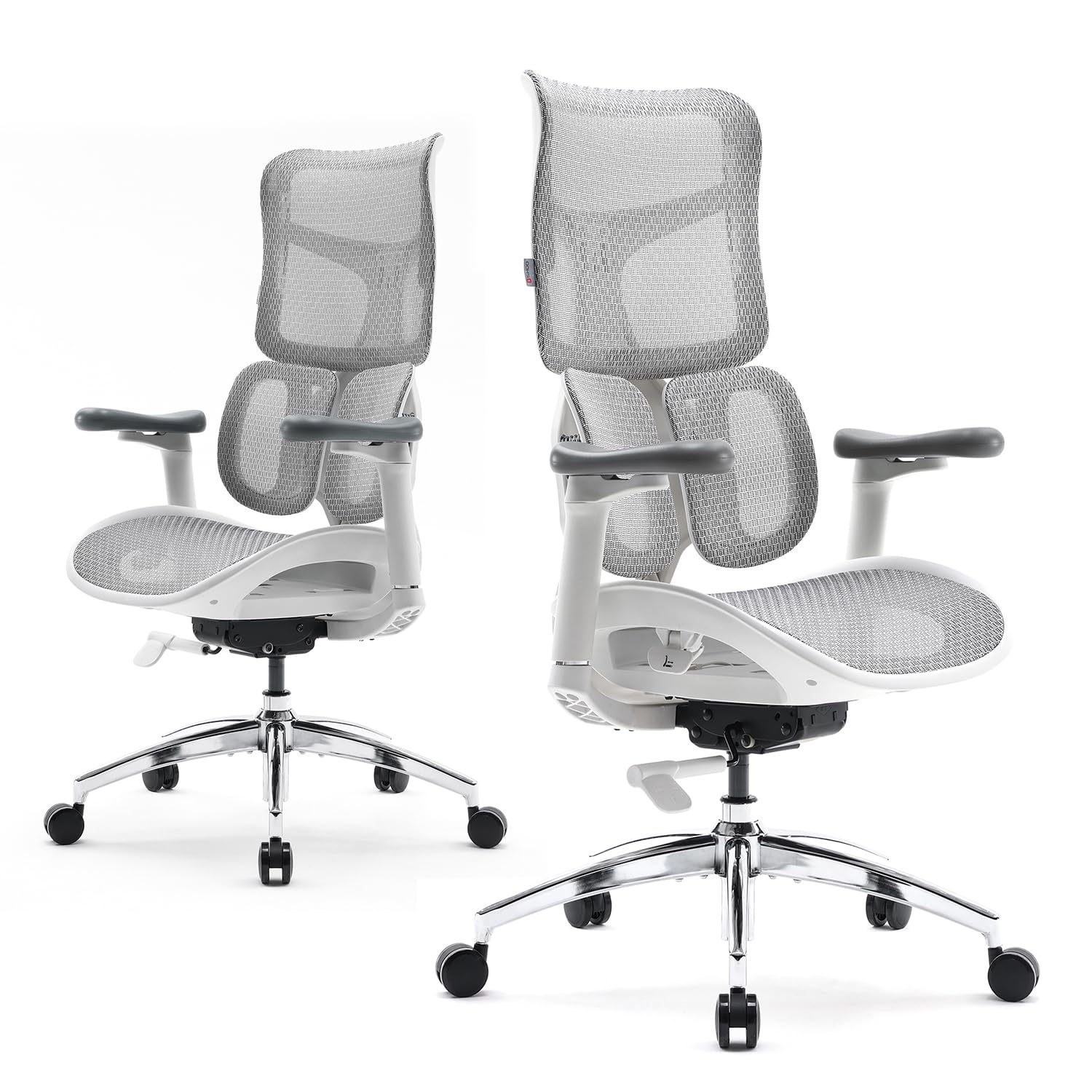
The SIHOO Doro S100 is built around adjustable support, with a dual dynamic lumbar system, coordinated armrests, and a backrest that can be positioned to suit different users.
This sihoo s100 chair review looks at how those features may fit a home office and what to check before choosing it.
Doro S100 Review Summary
The quick verdict
100+ ratings
Read Amazon ReviewsSIHOO Doro S100
A flexible mesh office chair for desk workers who want adaptive lumbar support, adjustable arm positioning, and a customizable backrest.
- Dual dynamic lumbar support uses a four-spring mechanism and is described as providing six-dimensional automatic adjustment.
- The 4D armrests adjust up and down by 2.76 inches, forward and back by 1.18 inches, and inward or outward by 72 degrees.
- Armrests coordinate with the backrest during reclining, keeping arm support linked to the chair’s movement.
- The independently adjustable backrest has five upper-back positions; the described fit range is for users from 5 feet to 6 feet 3 inches.

Pros
- Multiple lumbar-support adjustments are aimed at following changes in posture.
- Armrest movement in several directions makes it easier to align support with a desk and preferred working position.
Consider before buying
- The listed height range is broad, but individual fit will still depend on torso and leg proportions; check the chair’s dimensions if available before buying.
- The description gives a maximum recline angle but does not explain how recline resistance or locking is adjusted, so confirm those controls if they matter to your routine.
Read the full review summary
The Doro S100 focuses on fine-tuning contact points rather than relying on a single fixed posture.
Its lumbar support uses a four-spring adaptive mechanism, while the backrest height has five positions and the seat depth adjusts by 1.97 inches.
Those features give buyers several ways to align the chair with their body and desk routine.
Its 4D armrests move in multiple directions and coordinate with the backrest as it reclines, while the mesh back offers a breathable alternative to a fully upholstered design.
The chair is worth considering for people who spend substantial time at a desk and want adjustable lumbar, arm, and back support; fit still depends on how the seat and backrest align with your body.
The buying factors
Doro S100 Scorecard
Editorial scores reflect listed features and buyer fit; they are not laboratory measurements or customer ratings.
Lumbar adjustability
The four-spring dynamic system is described as adapting in six dimensions, giving the lower-back support a wide range of movement.
Armrest flexibility
The armrests adjust vertically, forward and back, and inward and outward, and coordinate with recline.
Backrest fit
Five backrest positions and the stated user-height range provide useful ways to position upper-back support.
Seat positioning
A 1.97-inch seat-depth adjustment and waterfall-shaped cushion offer some fit flexibility, though no seat width or height dimensions are supplied.
Breathable support
High-resilience mesh is used for the backrest, supporting airflow where the chair contacts the upper body.
Recline flexibility
The chair reclines up to 135 degrees, though the supplied details do not describe multiple lock positions or tension adjustment.
Key Features and Specifications of Doro S100
- Dual dynamic lumbar support uses a four-spring mechanism and is described as providing six-dimensional automatic adjustment.
- The 4D armrests adjust up and down by 2.76 inches, forward and back by 1.18 inches, and inward or outward by 72 degrees.
- Armrests coordinate with the backrest during reclining, keeping arm support linked to the chair’s movement.
- The independently adjustable backrest has five upper-back positions; the described fit range is for users from 5 feet to 6 feet 3 inches.
- The seat depth adjusts through a 1.97-inch range, and the cushion has a waterfall-shaped front edge.
- The backrest uses high-resilience mesh fabric, and the maximum recline angle is 135 degrees.
- The product description cites BIFMA and SGS certifications.
Pros and Cons of Doro S100
Pros
- Multiple lumbar-support adjustments are aimed at following changes in posture.
- Armrest movement in several directions makes it easier to align support with a desk and preferred working position.
- Five backrest positions and adjustable seat depth give users more than one way to refine fit.
- Mesh backrest and waterfall-shaped seat design are intended to support airflow and spread contact across the thighs.
Consider before buying
- The listed height range is broad, but individual fit will still depend on torso and leg proportions; check the chair’s dimensions if available before buying.
- The description gives a maximum recline angle but does not explain how recline resistance or locking is adjusted, so confirm those controls if they matter to your routine.
- A waterfall-shaped cushion and depth adjustment may not suit every body or desk setup; consider whether the seat edge and depth feel comfortable for your legs.
Who Should Buy Doro S100?
Good fit
Consider the Doro S100 if you want a chair whose lumbar system can move with shifts in posture and whose armrests offer several adjustment directions.
The linked armrest movement may be useful if you regularly lean back between focused work sessions and want your arms to remain supported.
It also makes sense for buyers who need to tune backrest position and seat depth rather than accept a fixed fit.
Compare the stated height range with your own proportions, and check the seat dimensions and desk clearance before committing if those details are important to you.
Who should skip it
Look elsewhere if you need a chair with a specified seat width, a separately adjustable headrest, or clearly described recline locks and tension controls; those details are not provided here, so verify them before purchase if they are essential.
If you prefer a fixed, simple chair with fewer adjustments, the Doro S100’s many moving support points may add complexity without offering much benefit for your routine.
SIHOO Doro S100 Chair Review: Fit and Adjustment
How the dynamic lumbar system may fit
The Doro S100’s four-spring lumbar mechanism is designed to adjust automatically across six dimensions as posture changes.
That approach may appeal to people who alternate between upright work and leaning back, though a moving support system is not a substitute for checking whether the lumbar area meets the right part of your back.
A buyer should test the support range and make sure it feels appropriately placed rather than assuming automatic movement guarantees an individual fit.
Armrests that follow recline
The armrests’ height, front-to-back position, and inward-outward angle can be adjusted, with the backrest linkage carrying them along when reclining. This gives users options for arranging their arms at the desk and during a lean-back break.
Check that their height works with your desk and keyboard position; the available movement is useful only if it allows a relaxed shoulder position in your setup.
Backrest and seat fit
Five backrest positions let users change where upper-back support lands, and the description gives a fit range from 5 feet to 6 feet 3 inches.
Seat depth adjustment adds another way to accommodate different leg lengths, while the waterfall front edge is intended to increase contact with the thighs and hips.
Since no seat width or overall dimensions are provided here, people with unusual fit needs should confirm those measurements before choosing.
Recline and mesh in daily use
The maximum recline is 135 degrees, and the mesh backrest is intended to provide a breathable support surface.
Together, these features suit a workday that includes occasional posture changes, although the details available do not explain recline locks or resistance controls.
If you like to set a precise tilt and keep it there, make sure the chair’s controls support that preference.
Alternatives to Doro S100
Home Office Desk Chairs alternative
17,000+ ratings
Read Amazon ReviewsSIHOO M57 Ergonomic Office Chair
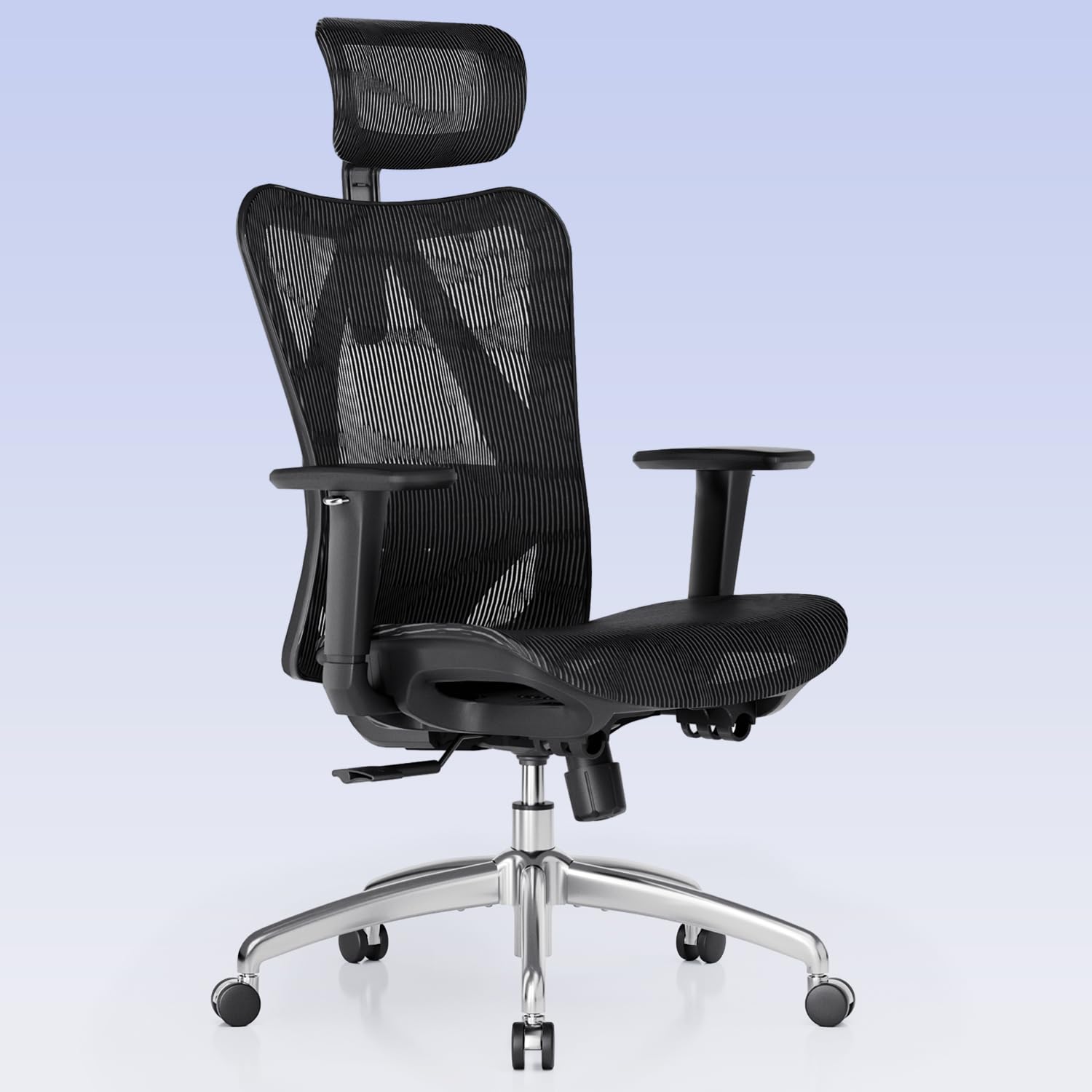
Choose the Doro S100 if its wider armrest movement and described lumbar adaptation are your priorities. Consider the M57 if you want a listed headrest and a stated weight capacity, and its described recline range suits your preferences.
- The M57 description highlights a height- and depth-adjustable lumbar support, tilting and lifting headrest, split backrest, 3D armrests, and recline from 90 to 126 degrees.
- It also specifies a capacity of up to 330 pounds.
- The Doro S100 emphasizes a six-dimensional dynamic lumbar mechanism, five-position backrest adjustment, a 1.97-inch seat-depth range, and 4D armrests that coordinate with recline.
Home Office Desk Chairs alternative
17,000+ ratings
Read Amazon ReviewsSIHOO B100 Office Chair
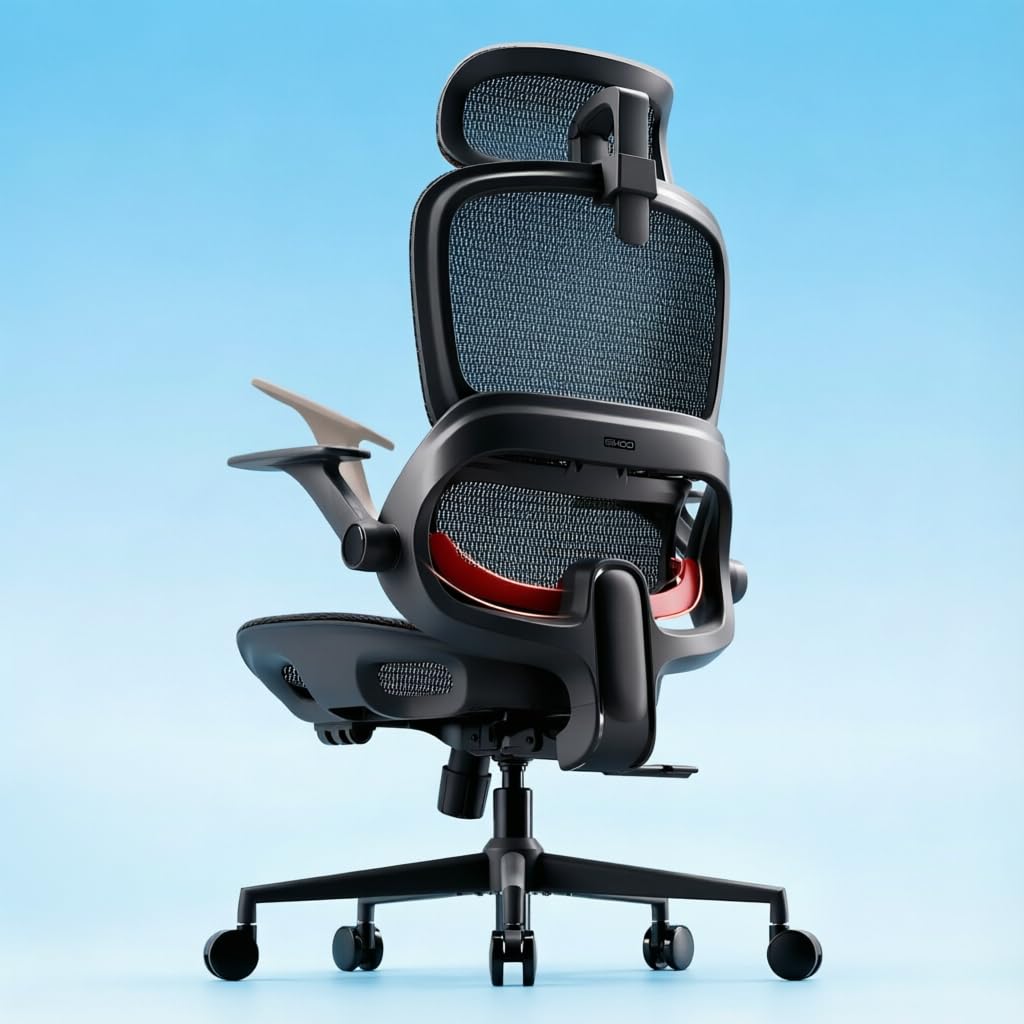
The B100 may suit compact workspaces where flip-up armrests and a headrest are useful. The Doro S100 is the stronger fit to consider when you want more armrest adjustment directions and a five-position backrest.
- The B100 description specifies three recline angles of 110, 125, and 135 degrees, a wide 2D headrest, and flip-up armrests that adjust with the recline and tuck under a desk.
- The Doro S100 has five backrest positions, adjustable seat depth, and armrests that coordinate with reclining.
Is Doro S100 Worth It?
The SIHOO Doro S100 is worth considering if adjustable lumbar support, versatile armrests, and backrest positioning are high on your chair checklist. Its design offers several ways to tune support around desk work and reclining breaks.
Before buying, verify that the seat dimensions and control details match your needs, especially if precise recline locking or a particular fit is essential.
For buyers whose body and workspace suit the listed adjustment range, it presents a thoughtfully configurable mesh office-chair option.
Your review at a glance
100+ ratings
Read Amazon ReviewsSIHOO Doro S100
A flexible mesh office chair for desk workers who want adaptive lumbar support, adjustable arm positioning, and a customizable backrest.
- Dual dynamic lumbar support uses a four-spring mechanism and is described as providing six-dimensional automatic adjustment.
- The 4D armrests adjust up and down by 2.76 inches, forward and back by 1.18 inches, and inward or outward by 72 degrees.
- Armrests coordinate with the backrest during reclining, keeping arm support linked to the chair’s movement.
- The independently adjustable backrest has five upper-back positions; the described fit range is for users from 5 feet to 6 feet 3 inches.