The best wireless keyboards balance the layout and controls you use with the connection options that suit your devices. These picks range from compact, customizable gaming boards to quieter, full-layout options for everyday work.
Quick Top Products
JLab JBuds Wireless Keyboard
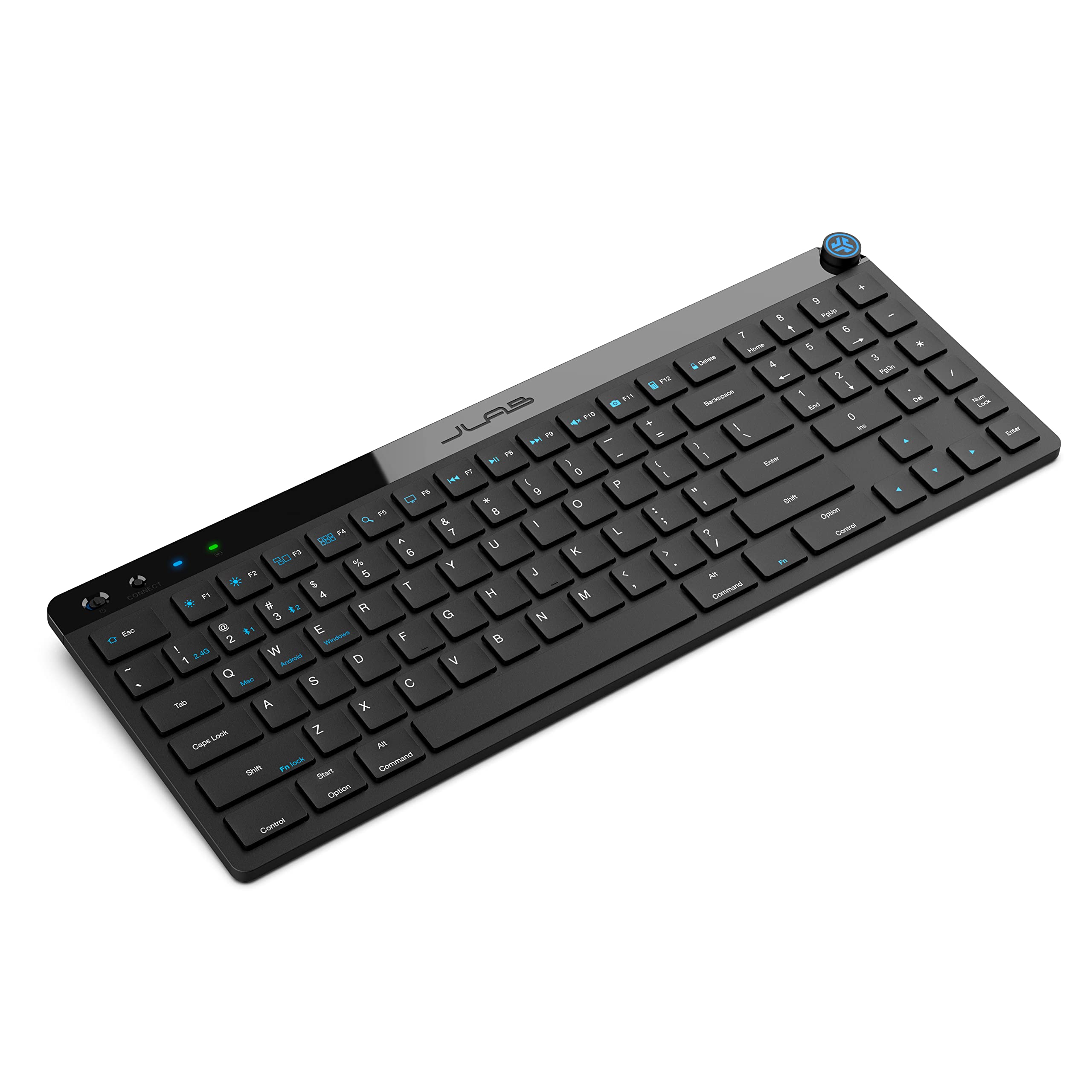
- 95 soft-touch keys with a numerical pad and media knob.
- Switch among up to three connections, including Bluetooth and USB dongle.
- Rechargeable battery life is up to 30 days.
Best For: A tidy work desk where quiet keys, a number pad, and device switching matter.

SOLAKAKA A75 Wireless Gaming Keyboard
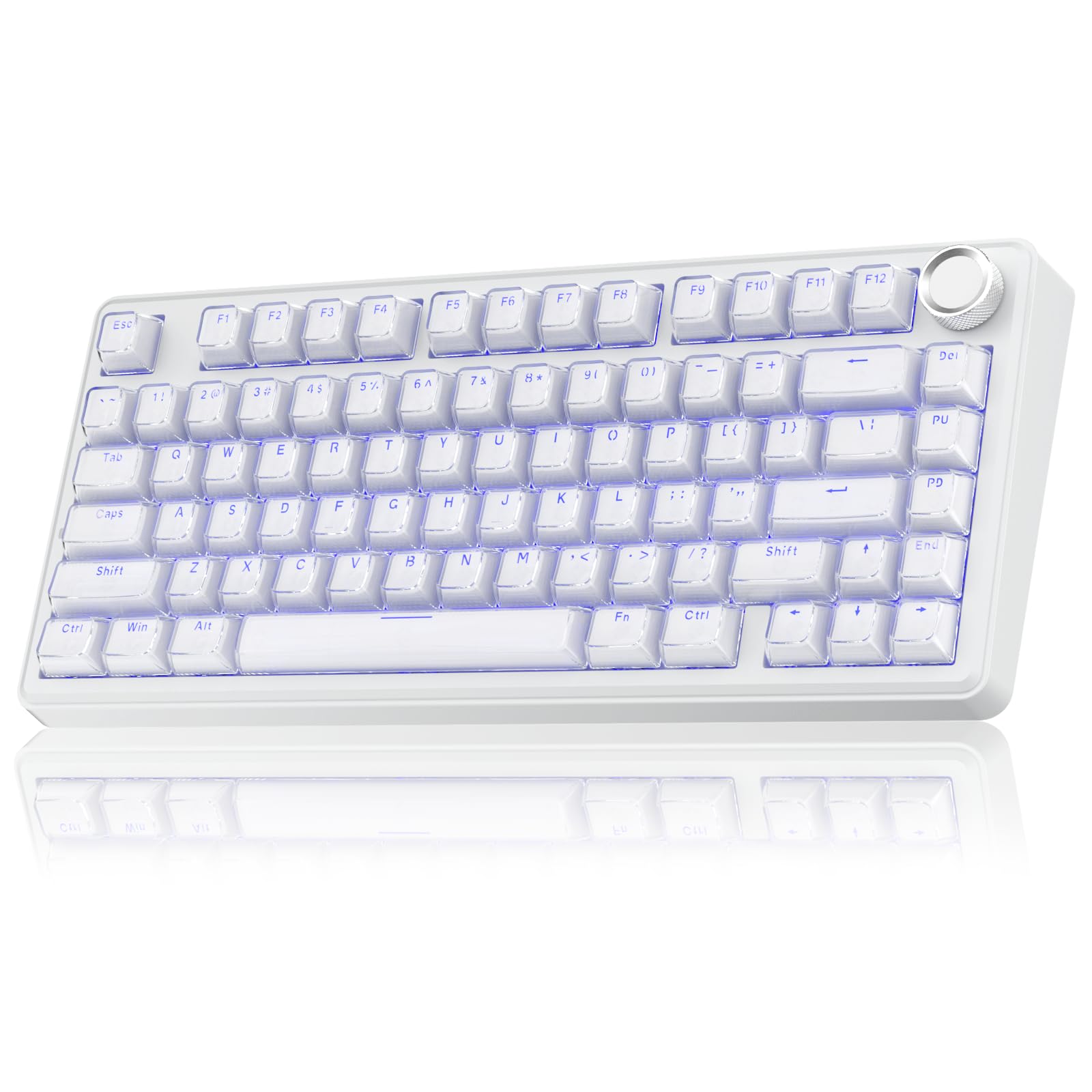
- Crystal keycaps sit on an 81-key 75% layout.
- Three connection options support up to five devices.
- Hot-swap sockets accept 3-pin and 5-pin switches.
Best For: A compact setup that favors crystal-style keycaps and tri-mode multi-device connections.
SOLAKAKA KI99 Pro Wireless Mechanical Keyboard
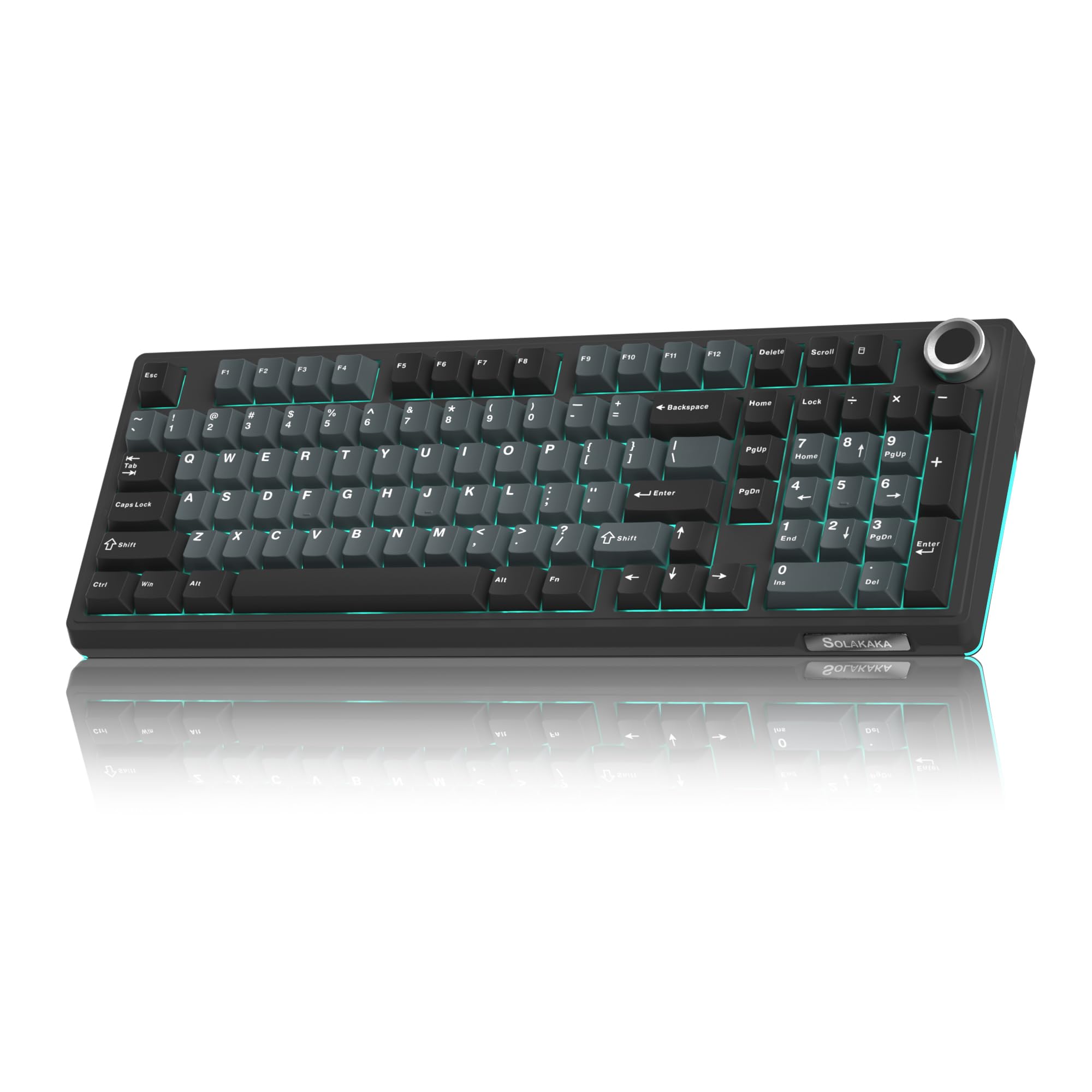
- 96% layout includes a control knob for volume, media, and lighting.
- Silent switches pair with five noise-reducing layers.
- Wireless and wired connections include Bluetooth, 2.4GHz, and Type-C.
Best For: A user who wants a number pad, wireless choices, and quieter mechanical switches.
JLab Epic Wireless Keyboard
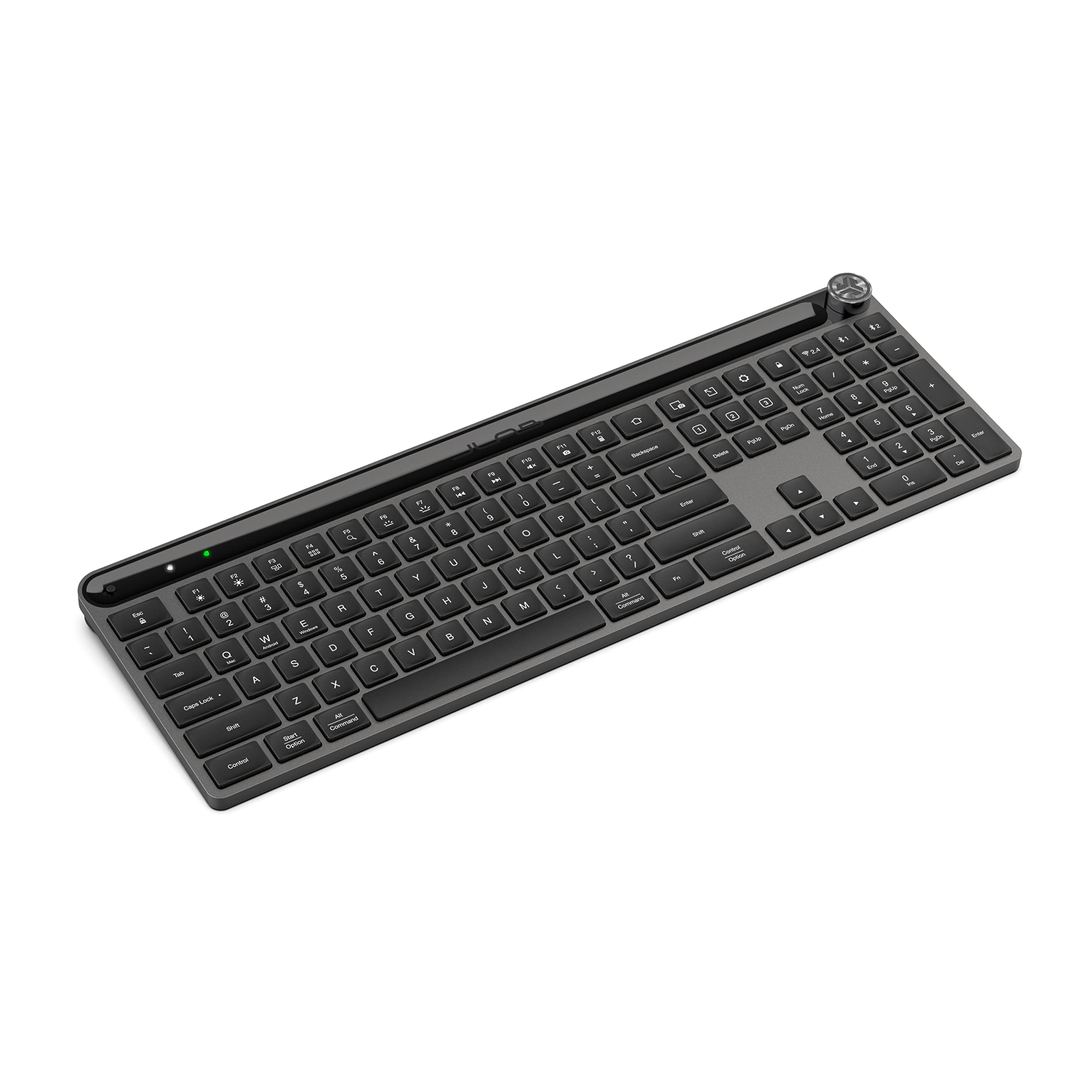
- 108 full-size keys have backlighting and a smart media knob.
- Bluetooth pairs with up to three devices, with a USB dongle option.
- Rechargeable 2000mAh battery and metal base.
Best For: Everyday work that benefits from a number pad, backlighting, and a familiar full-size layout.
SteelSeries Apex Pro Mini Wireless
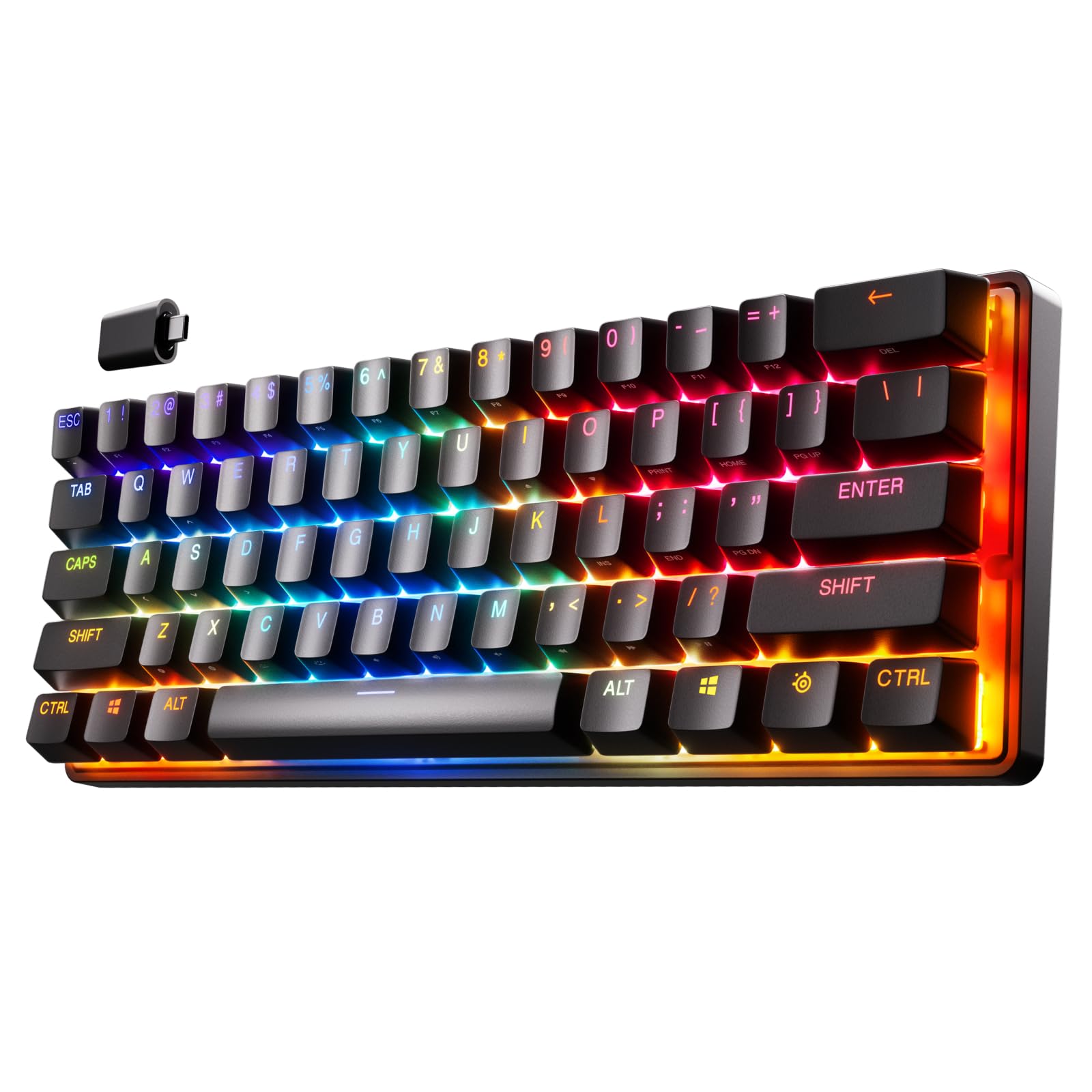
- 60% form factor combines compact size with full-size functionality.
- OmniPoint 2.0 supports 40 actuation levels from 0.1 to 4.0mm.
- Quantum 2.0 offers 2.4GHz and Bluetooth 5.0.
Best For: Competitive gaming setups that need a small wireless board with adjustable actuation.
SOLAKAKA A99 Pro Wireless Mechanical Keyboard
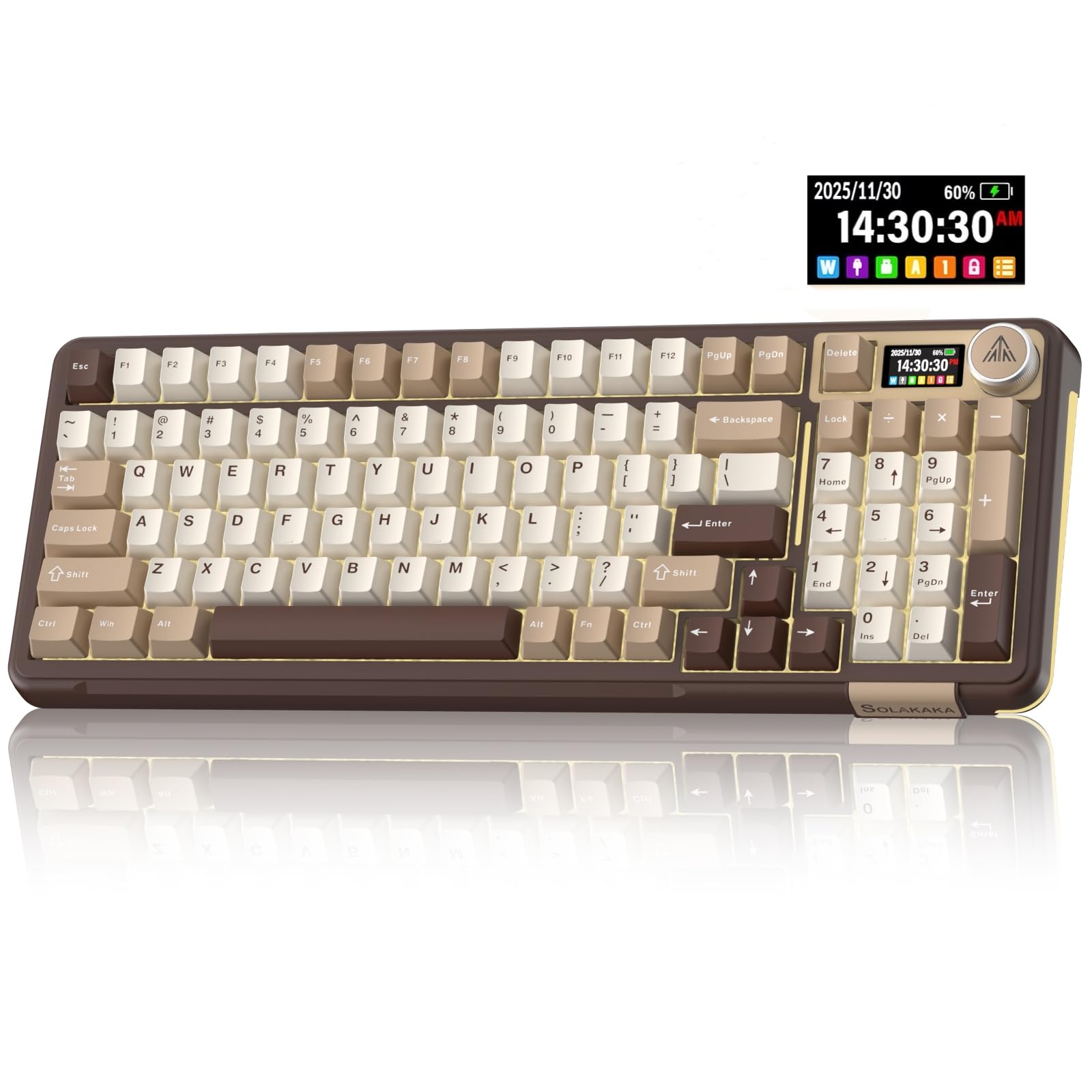
- LCD display shows battery, connection, and system details.
- Tri-mode connectivity supports up to five devices.
- Hot-swappable switches support 3-pin and 5-pin types.
Best For: Users who want an LCD status display, hot-swappable switches, and broad device compatibility.
Quiet Multi-Device Work
JLab JBuds Wireless Keyboard, 95 Key, Multi-Device Bluetooth and USB dongle, Soft Touch Keys, Media knob, Custom Profiles, Black
The JLab JBuds pairs a compact 95-key layout and full numerical pad with soft-touch keys designed for quiet typing. A dedicated media knob handles volume and playback, so common controls stay close at hand.
It connects through Bluetooth 5.2 or a USB wireless dongle and can toggle among three connections, including two Bluetooth pairings. The rechargeable battery is rated for up to 30 days of wireless use.
JLab Work App adds custom shortcuts and up to three user profiles. This makes it a practical fit for switching between work devices, though buyers who need backlighting or a full-size layout should look elsewhere.
Best For: A tidy work desk where quiet keys, a number pad, and device switching matter.
| Pros | Cons |
|---|---|
|
|
Choose the JBuds if your workday spans multiple devices and you want a number pad in a slim design. The media knob and soft-touch keys make it oriented toward everyday typing and quick audio adjustments.
Its 95-key layout supports numerical entry while keeping a clean, polished aesthetic, though this model has no documented backlighting. Check whether the keyboard layout and app features fit your workflow, especially if you type in dim rooms or rely on a dedicated key for every function.
Crystal Caps and Five-Device Pairing
SOLAKAKA A75 Wireless Gaming Keyboard with Multifunction Knob, BT5.0/2.4GHz/USB-C, 75% Mechanical Keyboard, Hot-Swappable, Gasket Creamy Keyboard with RGB Backlit, Crystal Keycaps, for PC/Mac/PC
The SOLAKAKA A75 combines an 81-key, 75% layout with crystal keycaps and a multifunction knob. Arrow keys remain available while the smaller layout frees desk space.
Tri-mode connectivity includes 2.4GHz, Bluetooth 5.0, and USB-C, and the keyboard supports up to five devices. Its 4000mAh battery supports wireless use, while hot-swap sockets accept 3-pin and 5-pin switches without soldering.
The knob changes behavior between gaming and office modes, handling lighting in one and volume in the other. The product information does not specify a runtime for the battery, so buyers who need long unplugged sessions should check expected battery life before choosing it.
Best For: A compact setup that favors crystal-style keycaps and tri-mode multi-device connections.
| Pros | Cons |
|---|---|
|
|
Choose this version if the crystal-style keycaps are a priority and you want a compact layout with arrow keys. Its tri-mode connectivity and five-device support are useful when moving between a computer, tablet, and phone.
The 4000mAh battery is specified, but runtime is not, so capacity alone does not tell you how often charging will be needed. Check the keycap feel and lighting legibility against your preferences, particularly if you type for long stretches or use the keyboard in changing light.
Quieter 96% Mechanical Layout
SOLAKAKA KI99 Pro Wireless Mechanical Keyboard with Quiet Switch, Hot Swappable Pre-Lubed Switches with RGB Backlit, Gasket Structure Computer Gaming Keyboard (BlackBlue, Silent Switch)
This KI99 Pro combines a 96% layout with a number pad and a control knob for volume, media, and lighting brightness. It connects through Bluetooth 5.0, 2.4GHz, or USB-C and supports Windows, macOS, PCs, laptops, and smartphones.
Silent switches and five noise-reducing layers are intended to reduce typing noise, while PBT keycaps have a non-slip finish. The 1.2mm flex-cut PCB supports tool-free replacement of 3-pin or 5-pin switches.
RGB lighting includes side bars, and software can handle key programming and macros. Battery capacity is not specified, so check charging expectations if you plan to use it wirelessly for long sessions.
Best For: A user who wants a number pad, wireless choices, and quieter mechanical switches.
| Pros | Cons |
|---|---|
|
|
This is a sensible fit if you need a number pad but want a more compact footprint than a full-size board, along with quieter mechanical switches. The silent switch option and layered construction distinguish it from the KI99 Pro cream-switch model, while the same 96% style preserves familiar numeric entry.
Battery details are a key unknown for wireless use. Check whether the control knob and included switches match your preferences, and verify the battery expectations before relying on it away from a cable.
Full-Size Backlit Work Keys
JLab, Epic, Wireless Keyboard, Bluetooth 5.2, USB Dongle, Multi-Device, Backlit, 108 Keys, Black
The JLab Epic is a full-size keyboard with 108 backlit keys, a metal base, and soft-touch keys designed for a comfortable, quiet typing feel. Its smart media knob provides direct volume control.
Bluetooth 5.2 can pair with up to three devices, and a USB wireless dongle is another connection option. A 2000mAh rechargeable battery powers the board, and JLab Work App supports up to three custom profiles.
These features fit a mixed-device work desk where lighting and dedicated keys matter. Its full-size footprint takes more room than the compact JLab JBuds, so measure your desk and consider whether all 108 keys are useful to your setup.
Best For: Everyday work that benefits from a number pad, backlighting, and a familiar full-size layout.
| Pros | Cons |
|---|---|
|
|
Choose the Epic if you want a full-size key arrangement, backlighting across the board, and device switching for work. Its metal base and media knob add desk-focused features, while the 2000mAh battery capacity is given without a runtime estimate.
Compared with the JBuds, it uses more desk space and offers a larger key set. Check the available workspace and whether the dedicated number pad and full function row justify that footprint for your daily tasks.
Wireless 60% Gaming Controls
SteelSeries Apex Pro Mini Wireless Keyboard - 60% Design - OmniPoint 2.0 - Quantum 2.0 Wireless - Double Shot PBT Keycaps - Black
The SteelSeries Apex Pro Mini Wireless packs its gaming features into a 60% form factor with full-size functionality accessible through its compact design. OmniPoint 2.0 adjustable HyperMagnetic switches offer 40 per-key actuation levels from 0.1 to 4.0mm, and 2-in-1 action keys can assign different actions to light and deep presses.
Rapid Trigger adjusts activation and deactivation based on key travel distance. Quantum 2.0 wireless offers 2.4GHz and Bluetooth 5.0, with a detachable USB-C connection available.
This combination fits players seeking fine control and a clear desk. The compact layout requires comfort with layered or secondary key functions, and numeric keypad use is not native in the usual full-size arrangement.
Best For: Competitive gaming setups that need a small wireless board with adjustable actuation.
| Pros | Cons |
|---|---|
|
|
Pick this board for wireless gaming when adjustable actuation and minimal desk use matter more than dedicated keys. Its switch settings and dual-action keys allow per-key tuning, while 2.4GHz, Bluetooth, and detachable USB-C provide connection flexibility.
A 60% layout means regular number entry and navigation may involve secondary functions, so it is less suitable for spreadsheet-heavy work. Check that the reduced physical layout suits your games and typing habits before choosing it over a larger keyboard.
LCD Status Screen and Five-Device Switching
SOLAKAKA A99 Pro Mechanical Keyboard with LCD Screen & Metal Knob, Wireless Gaming Keyboard with BT5.0/2.4GHz/USB-C, Hot Swappable Creamy Keyboard, Gasket Structure, RGB Backlit, for Win/Mac
The SOLAKAKA A99 Pro adds an LCD screen and metal knob to a wireless mechanical keyboard. The display can show date, time, battery level, connected system, and connection mode, while the knob handles settings such as volume, lighting, and system switching.
Tri-mode connections include Bluetooth 5.0, 2.4GHz, and USB-C, with up to five devices saved. It supports Windows, iOS, Mac, and Android.
The gasket construction uses five cushioning layers, and hot-swap support accepts 3-pin or 5-pin switches without soldering. RGB lighting includes side lights.
Its layout size and battery capacity are not specified, so check both before buying if footprint or unplugged runtime is important.
Best For: Users who want an LCD status display, hot-swappable switches, and broad device compatibility.
| Pros | Cons |
|---|---|
|
|
Consider the A99 Pro if an at-a-glance screen and broad device support are more useful than a known layout specification. The display and metal knob expose battery and connection information, and the board supports three connection modes plus switch customization.
The missing layout and battery details make it harder to assess desk fit and unplugged use. Confirm the key count, physical arrangement, and battery expectations before choosing it, especially if you need a number pad or plan to move frequently between locations.
How to Choose Wireless Keyboards
How We Picked Wireless Keyboards
The candidates include compact office boards, full-size wireless models, and mechanical keyboards aimed at gaming or customization. We prioritized products with clearly described layouts, connection types, multi-device support, and specific controls that affect daily use.
Where several offers described the same manufacturer model, we treated them as one choice and selected a single variant. Bulk packs were considered only when they offered a distinct compact-keyboard use case.
The resulting options cover quiet soft-touch typing, backlit full-size keys, small travel layouts, hot-swap mechanical switches, and adjustable actuation for gaming. A good fit depends on whether you need a number pad, arrow keys, easy device switching, lighting, or room to tune the switches.
Comparing Wireless Keyboards by Layout and Connection
Layout is the first practical choice. JLab's 108-key Epic has a conventional full-size arrangement, while its 95-key JBuds keeps a numerical pad in a slimmer layout.
The SOLAKAKA A75 models use 81 keys and retain arrow keys; the KI99 Pro's 96% layout adds a number pad. A 60% SteelSeries board frees more space but relies on secondary functions for tasks that use dedicated keys.
Connection features vary as well. Several SOLAKAKA models offer Bluetooth, 2.4GHz wireless, and USB-C, while the JLab boards pair Bluetooth with a USB receiver.
SteelSeries adds Quantum 2.0 wireless with Bluetooth and 2.4GHz. If you move between devices, check how many connections the keyboard can save and whether its switching controls suit your routine.
| Product | Standout features | Best for |
|---|---|---|
| JLab JBuds Wireless KeyboardCheck Price |
| A tidy work desk where quiet keys, a number pad, and device switching matter. |
| SOLAKAKA A75 Wireless Gaming KeyboardCheck Price |
| A compact setup that favors crystal-style keycaps and tri-mode multi-device connections. |
| SOLAKAKA KI99 Pro Wireless Mechanical KeyboardCheck Price |
| A user who wants a number pad, wireless choices, and quieter mechanical switches. |
| JLab Epic Wireless KeyboardCheck Price |
| Everyday work that benefits from a number pad, backlighting, and a familiar full-size layout. |
| SteelSeries Apex Pro Mini WirelessCheck Price |
| Competitive gaming setups that need a small wireless board with adjustable actuation. |
| SOLAKAKA A99 Pro Wireless Mechanical KeyboardCheck Price |
| Users who want an LCD status display, hot-swappable switches, and broad device compatibility. |
Choosing a Wireless Keyboard for Work and Travel
For office typing, look at key feel, numeric entry, lighting, and media controls. The JLab JBuds combines soft-touch keys, a number pad, and a media knob; the Epic adds full-size backlit keys.
The JLab Go is a compact scissor-switch option for travel or shared spaces, but its four-pack format is aimed at equipping multiple users.
Battery information needs careful comparison. Some products give capacity, such as the 4000mAh A75 and 10,000mAh KI99 Pro, while others give an estimated runtime or provide neither.
Capacity alone does not establish how long a keyboard will last between charges. If frequent charging would disrupt your setup, check expected wireless runtime and whether wired use is practical.
Picking a Wireless Gaming Keyboard for Customization
Mechanical boards differ in how much they let you change. The SteelSeries Apex Pro Mini Wireless adjusts actuation per key and supports two actions on one key, making it the most specialized option for players who want to tune inputs.
The SOLAKAKA boards instead emphasize hot-swappable switches, gasket construction, RGB effects, and programmable controls. Verify which selected variant includes the switch type and keycaps you want.
Software can also affect the choice. The A75 driver requires Windows and wired mode, while the KI99 Pro and A99 Pro records describe programmable software without the same detail about operating constraints.
Before buying, check software support for your computer and consider whether the keyboard's onboard controls cover the changes you expect to make.
Who Should Buy Which Wireless Keyboard?
Choose the JLab JBuds for a quieter multi-device work desk with a number pad, or the Epic for full-size backlit keys. The JLab Go makes more sense when compact size and a multi-keyboard pack match the job.
For a smaller mechanical layout with hot-swap capability, compare the three A75 variants by keycaps and software details.
Choose the KI99 Pro if a number pad and 10,000mAh battery matter, with the silent-switch version better suited to quieter spaces. The SteelSeries Apex Pro Mini Wireless is for gaming setups that value adjustable actuation and desk space.
The A99 Pro's screen and knob are appealing if at-a-glance connection and battery information help, but confirm its layout and battery runtime first.